
California Seller Disclosure Requirements: What Homeowners Must Reveal
California home sellers generally must disclose known facts that materially affect a property’s value or desirability. For many one-to-four-unit residential sales, that includes a completed Real Estate Transfer Disclosure Statement, natural-hazard information, known defects and repairs, and other disclosures triggered by the home’s age, location, ownership structure, or features.
An “as-is” sale does not create permission to hide problems. The safest practical approach is to answer disclosure questions completely, provide available reports and records, update information if circumstances change, and ask qualified professionals about anything unclear.
Quick answer: Disclose what you actually know, do not guess, do not conceal, and do not treat a cosmetic repair as a substitute for explaining the underlying history.
This article is a general educational overview, not legal advice. California disclosure duties are fact-specific, exceptions exist, and forms and statutes change. Sellers with legal questions should consult a qualified California real estate attorney.
The Transfer Disclosure Statement
The Real Estate Transfer Disclosure Statement—commonly called the TDS—is a central disclosure in many California residential transactions. It addresses the seller’s knowledge of the property’s condition, systems, features, defects, and other circumstances.
The California Department of Real Estate explains that the seller’s disclosure covers the property’s physical condition and potential hazards or defects. The agents involved also have specified visual-inspection and disclosure responsibilities. See the DRE’s Information for Homebuyers and its current Disclosures in Real Property Transactions publication.
The disclosure is not a home warranty and does not require a seller to know what only a specialist could discover. It does require good-faith answers based on the seller’s actual knowledge and reasonable efforts.
What types of property conditions should a seller disclose?
If known and relevant, common subjects include:
- Roof leaks, repairs, or water intrusion
- Plumbing leaks, sewer problems, or recurring backups
- Electrical problems or unpermitted wiring
- Foundation movement, cracks, or structural repairs
- Drainage, grading, or flooding issues
- Mold, moisture, or remediation history
- Termite, dry rot, or other wood-destroying pest history
- Fire, smoke, or other significant damage
- Room additions, conversions, ADUs, or alterations
- Work completed without permits or with unknown permit status
- Heating, cooling, appliance, pool, or solar-system problems
- Boundary, fence, easement, encroachment, or neighbor disputes
- Insurance claims or reports related to property damage
- Ongoing noise, nuisance, or other conditions affecting desirability
The correct answer depends on the facts. A seller should not assume that an old repair no longer matters. The repair, its cause, the contractor’s work, permits, warranties, and whether the issue returned can all be useful information for a buyer.
Natural Hazard Disclosure Statement
California’s Natural Hazard Disclosure Statement identifies whether a property lies in mapped hazard areas. Depending on the property, the statement can address earthquake fault zones, seismic hazard zones, flood areas, fire hazard severity zones, wildland fire areas, and other designated conditions.
Many transactions use a third-party natural-hazard report, but that report is accompanied by the required statement and does not erase the seller’s other disclosure responsibilities. California Civil Code section 1103.2 contains the statutory form and warnings. Review the current California Natural Hazard Disclosure law.
For homes in Southeast Los Angeles County, buyers may focus on seismic zones, flooding and drainage, fire-related mapping where applicable, airport influence, and locally assessed taxes or districts. The report should be read rather than treated as one more signature page.
Federal lead-based paint disclosure
For most housing built before 1978, federal rules require sellers to provide specified lead-based paint information before the buyer becomes obligated under the contract. Requirements generally include:
- An EPA-approved lead-hazard information pamphlet
- A lead warning statement
- Disclosure of known lead-based paint or lead hazards
- Available records and reports concerning lead-based paint
- The contractually required opportunity for the buyer to conduct a lead inspection or risk assessment, unless handled differently as allowed by law
The EPA’s current Lead-Based Paint Disclosure Rule guidance explains the federal requirements.
2026 California disclosure update: smoking and nicotine residue
Effective January 1, 2026, a seller of covered single-family residential property who has actual knowledge of tobacco or nicotine residue—or a history of occupants smoking tobacco or nicotine products on the property—must disclose that knowledge to the buyer in writing. The statute includes electronic cigarettes and vaping.
The California DRE summarizes the change in its 2025 chaptered-bill report, and Civil Code section 1102.6k appears in the current California disclosure statutes.
This is a good example of why sellers should use current forms and current professional guidance rather than copying a disclosure packet from an older transaction.
Gas-powered appliance requirements or restrictions
For covered transactions on or after January 1, 2026, California Civil Code section 1102.6j requires written disclosure of known state or local requirements or restrictions concerning future replacement of gas-powered appliances transferred with the property.
This does not mean every gas appliance must be replaced before sale. It means sellers should not overlook known requirements or restrictions that apply to future replacement.
Solar systems
Solar can involve both property-condition disclosures and contractual documents. Sellers should gather:
- Purchase, lease, or power-purchase agreement
- Financing and payoff information
- Transfer requirements
- Warranty and service documents
- Production information, if available
- Permits and plans, if available
- Known roof or equipment issues
Do not describe an owned system as paid off unless the records support that statement. Title, escrow, the solar provider, the lender, and qualified advisers may need to coordinate the transfer.
Condominiums and HOA documents
Condominium and planned-development sales involve association documents in addition to property disclosures. California Civil Code section 4525 lists documents generally provided to prospective purchasers, including governing documents and specified association information. See the current California common-interest development transfer law.
Sellers should start the HOA-document request early. Delays, missing materials, pending assessments, litigation, insurance issues, or incomplete questionnaires can affect timing and buyer decisions.
Permits, additions, conversions, and ADUs
Older homes throughout Downey and Southeast Los Angeles County may have enclosed patios, converted garages, additions, or accessory units created under different owners and different rules.
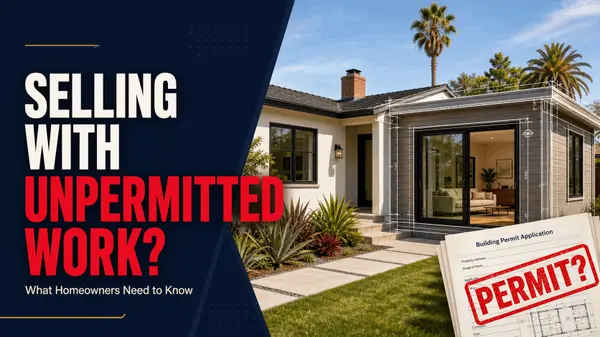
If a seller knows that work was performed without permits—or does not know whether permits were obtained—the seller should not market the space as unquestionably legal. Gather available plans, permits, invoices, and correspondence. Let the buyer investigate and let qualified professionals address legal-use questions.
Deaths, neighborhood conditions, and other sensitive facts
California law treats certain sensitive subjects differently, and the answer can depend on timing, the type of event, direct buyer questions, fair-housing considerations, and other facts. Sellers should not improvise answers or publish stigmatizing information online.
When a question involves a death at the property, neighborhood demographics, health information, crime, or another sensitive issue, ask the broker or a qualified attorney how to respond lawfully and accurately.
When should disclosures be delivered?
The practical answer is as early as possible. California Civil Code section 1102.3 requires delivery as soon as practicable before transfer of title for covered sales. If a required disclosure or material amendment is delivered after the offer is executed, the buyer may receive a statutory termination period—generally three days after personal delivery or five days after qualifying mail or electronic delivery, subject to the statute’s requirements.
Read the current text of California Civil Code section 1102.3. Contract rights and timelines are fact-specific, so obtain legal advice when needed.
Late surprises create avoidable risk. A complete disclosure package available early can help buyers investigate, price repairs, and make better-informed offers.
Should sellers order inspections before listing?
Sometimes. A pre-listing inspection may help a seller identify issues, obtain estimates, decide what to repair, and prepare a more organized disclosure package. It can also reveal conditions the seller must then address honestly.
A pre-listing inspection does not replace the buyer’s own due diligence, and it is not right for every sale. Read [Should You Sell Your California Home As-Is or Make Repairs?](/blog/sell-california-home-as-is-or-make-repairs) before choosing a strategy.
A seller disclosure preparation checklist
Before listing, gather what you have:
- Prior inspection and pest reports
- Roof, plumbing, electrical, HVAC, and foundation invoices
- Insurance claim information
- Permits, plans, and approvals
- Warranties and service records
- Solar documents
- HOA documents and assessment information
- Lease or tenant records, if applicable
- Notices from public agencies or utilities
- Correspondence about boundaries, drainage, or disputes
- Records of water intrusion, mold work, or remediation
Then walk through the property and disclosure forms carefully. If the answer is unknown, say it is unknown rather than guessing. If new information appears during escrow, disclose it promptly and obtain advice about any required amendment.
Local perspective for Downey-area sellers
In Southeast Los Angeles County, many homes have decades of ownership history and multiple rounds of improvements. Buyers are not necessarily scared away by an older roof, a repaired leak, or an unpermitted question. They are more likely to become concerned when information arrives late or conflicts with what they were told.
Clear disclosure allows the sale strategy, price, inspection period, and negotiations to reflect reality. That is usually more stable than hoping a known issue will go unnoticed.
If you are planning a sale, start with a [home valuation](/evaluation), review your options on the [Sell My Home page](/sell), or [contact Orlando Garcia](/contact) to discuss how preparation and disclosure timing fit together.
Frequently asked questions
Do California sellers have to disclose every repair?
The forms and legal duties focus on known conditions and material facts, not a meaningless list of every paint touch-up. Significant repairs, recurring problems, defects, insurance claims, unpermitted work, and facts affecting value or desirability deserve careful attention. Ask the broker or an attorney when uncertain.
What if I bought the home recently and do not know its history?
Answer based on actual knowledge, make reasonable efforts to gather records, and do not guess. Provide reports and documents you possess. Limited ownership history does not justify concealing something you do know.
Does selling as-is eliminate disclosure requirements?
No. “As-is” generally addresses the seller’s willingness to make repairs; it does not cancel applicable disclosure duties or permit fraud, misrepresentation, or concealment.
Should I repair a defect before disclosing it?
Repairing a problem does not automatically erase the history. Disclose as required, describe the repair accurately, and provide available invoices, permits, warranties, or reports.
Can I complete disclosure forms before hiring an agent?
You can begin gathering records and writing a property history, but use current forms and obtain professional guidance. Avoid copying forms from an old transaction because requirements may have changed.
Are probate and trust sales exempt from disclosure rules?
Some transfers and fiduciary sellers may qualify for statutory exemptions from particular forms, but exemptions are technical and do not necessarily remove every disclosure obligation. A personal representative, trustee, conservator, or attorney should obtain transaction-specific legal guidance.
Categories
Recent Posts