
What Is a Probate Sale in California? A Plain-English Guide
What Is a Probate Sale in California? A Plain-English Guide
If someone you love has passed away and left behind a home, you may be hearing the word "probate" for the first time. It can feel overwhelming. There are court filings, legal deadlines, and a process that seems designed to confuse you. You're not alone in feeling that way.
Here's the good news: probate is manageable. Once you understand what it is and why it exists, the whole process starts to make a lot more sense. This guide will walk you through everything in plain English, no legal degree required.
What Is Probate?
Probate is the court-supervised process of settling a deceased person's estate. The court steps in to make sure debts get paid, assets get distributed properly, and no one gets cheated. In California, that process runs through your local Superior Court.
When a property owner passes away, the court needs to officially transfer ownership of their real estate to whoever is supposed to receive it. If the home was not held in a living trust or joint tenancy, that transfer almost always requires probate.
When Is Probate Required in California?
Not every estate goes through probate. California requires it when:
- The deceased did not have a living trust
- The property was not held in joint tenancy with a right of survivorship
- The total value of the estate exceeds $184,500 (this threshold adjusts periodically)
In Southeast Los Angeles County, where home values have climbed steadily for years, most estates easily cross that threshold. That means probate is more common here than people expect.
The Executor's Role
The executor (also called the personal representative or administrator) is the person legally authorized to manage the estate. If the deceased left a will, they likely named an executor. If there's no will, the court appoints an administrator, usually a close family member.
The executor is responsible for inventorying assets, paying debts, filing tax returns, and ultimately selling or distributing property. When it comes to real estate, the executor is the one who works with the real estate agent and signs off on the sale.
How a Probate Sale Differs from a Regular Sale
This is where things get interesting. A probate home sale looks similar to a regular sale on the surface, but there are some important differences.
Court confirmation hearing. In a standard probate sale in California, after the executor accepts an offer, the sale must be confirmed by the court at a hearing. Anyone who wants to overbid can show up that day and submit a higher offer. The property goes to the highest bidder.
10% deposit required. Buyers who want to bid at the court hearing must bring a cashier's check for 10% of their bid amount. This is non-negotiable. It's not like a typical earnest money deposit that's 1-3% of purchase price.
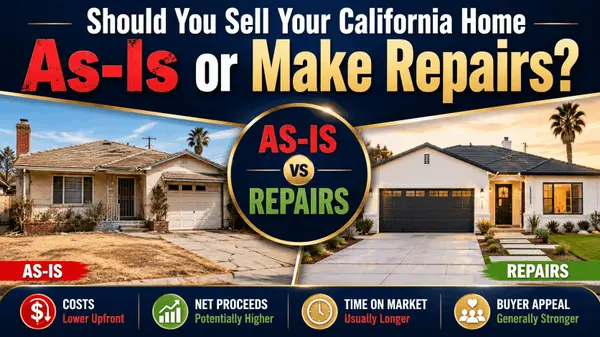
Sold as-is. Probate properties are almost always sold in their current condition. The estate typically doesn't make repairs or provide a home warranty. Buyers do their inspections, but the seller isn't going to fix the roof before close.
Longer timeline. A regular home sale in LA County takes 30 to 60 days. A probate sale typically takes 6 to 12 months from start to finish, sometimes longer if there are complications.
Local court timelines vary. Los Angeles County Superior Court handles a heavy probate caseload, so Downey and the rest of Southeast LA County often land on the longer end of that 6 to 12 month range. Your probate attorney can give you a realistic estimate based on current court schedules.
California Probate Code Basics
You don't need to memorize the California Probate Code. But a few things are worth knowing.
The law requires that a probate property be listed at no less than 90% of its court-approved appraised value. That appraisal is done by a probate referee, who is appointed by the court, not chosen by the executor.
California Probate Code Section 10309 governs the court confirmation process. It spells out how overbidding works, what the minimum overbid amount is, and how the hearing is conducted. Your probate attorney will handle these details. Just know the process is well-defined and designed to protect everyone involved.
The Independent Administration of Estates Act (IAEA)
Here's something that can save a lot of time. California has a law called the Independent Administration of Estates Act (IAEA). Under the IAEA, if all heirs agree and the court grants authority, the executor can sell the property without going through the court confirmation hearing.
Instead of a courtroom bidding process, the executor files a Notice of Proposed Action and gives heirs 15 days to object. If no one objects, the sale moves forward like a regular transaction.
Full vs. Limited Authority: What's the Difference?
Not all IAEA authority is the same. There are two levels, and the difference matters.
Full authority lets the executor sell the property without a court confirmation hearing at all, as long as no heir objects during that 15-day notice window. This is the fastest path through probate.
Limited authority still requires a court confirmation hearing for real estate sales, even though the executor can handle other estate matters on their own. It's a middle ground, and it slows things down.
Most wills and courts lean toward granting full authority these days, since it keeps things moving. Still, it's worth confirming which one applies to your case before you set expectations on timeline.
How Much Does a Probate Sale Cost?
Probate sales come with a few costs you won't see in a typical transaction. Here's what usually shows up:
- Probate attorney fees. Set by California statute based on the estate's gross value. For a $700,000 estate, expect roughly $18,000, paid out of the estate, not your pocket.
- Executor compensation. The executor is entitled to a statutory fee too, calculated on the same sliding scale as attorney fees. Some family members waive it, some don't.
- Probate referee fees. The court-appointed referee who appraises the property charges a fee, typically around 0.1% of the appraised value.
- Court filing fees. A few hundred dollars for the initial petition and related filings.
- Real estate agent commission. Same as any home sale. This gets negotiated up front and paid at closing.
None of this comes out of your pocket upfront. These costs are paid from the estate at closing, so you don't need to write a check just to get the process started.
What Buyers Need to Know
If you're buying a probate home, go in with your eyes open. The timeline is longer than a standard purchase. You'll need to bring a 10% deposit if you plan to bid at the court hearing. The home is sold as-is. And there's always a chance you could get outbid in the courtroom even after your offer was accepted.
Probate homes can be great opportunities, especially in competitive markets like Downey and Southeast LA County. Just work with an agent who understands the process and won't leave you confused at every step.
What Sellers (Executors) Need to Know
Your biggest job is to act in the best interest of the estate. Price the home appropriately based on the appraisal. Be patient, because the court moves on its own schedule. Communicate with heirs regularly so no one feels left out. And work with an agent who has done this before, because probate has its own language and its own rhythm.
The most common mistake executors make is moving too fast before they have legal authority to sell, or too slow and letting the property sit vacant for months. Neither is good. The goal is a smooth, fair, well-documented sale that closes without drama.
Common Mistakes to Avoid
After helping families through this process, the same few mistakes come up again and again.
- Listing before getting legal authority. You can't market the home until the court, or the IAEA notice period, confirms the executor's authority to sell.
- Pricing too low to move fast. Remember, the sale must be at least 90% of appraised value. Price it too low and you risk a failed confirmation or an awkward overbid situation at the hearing.
- Letting the property sit vacant and unmaintained. Vacant homes attract problems: break-ins, insurance headaches, and deferred maintenance that scares off buyers.
- Skipping communication with heirs. Even when everyone agrees on the sale, silence breeds suspicion. Regular updates head off disputes down the line.
- Choosing an agent without probate experience. Probate sales come with their own paperwork, deadlines, and court requirements. An agent who hasn't done one before will slow you down.
Frequently Asked Questions
How long does a probate sale take in California? Most take 6 to 12 months from the time probate is opened to the time the sale closes, though full IAEA authority can shorten that.
Can I back out after the court confirmation hearing? Once the court confirms the sale, it's final. You can't back out just because the overbidding didn't go your way. Talk it through with your agent before you commit to bidding.
Do I need an attorney for a probate sale? Yes. California requires a probate attorney to guide the estate through the court process. Your real estate agent handles the sale side, and the attorney handles the court side.
Can heirs sell their share before probate closes? Generally no. The property has to go through the probate process and sale before proceeds get distributed to heirs.
What happens if heirs disagree about selling? It happens more than you'd think. The executor still has authority to act in the estate's best interest, but disagreements can slow things down or call for mediation. A good probate attorney can help you work through it.
Is a probate sale a good deal for buyers? It can be. Probate sellers are often motivated, and the process is transparent. Just be ready for the as-is condition and the longer timeline.
Questions About a Probate Property in Downey or Southeast LA County?
Orlando Garcia has helped families navigate trust and probate sales across Southeast Los Angeles County. Whether you're just starting the process or already deep in it, he can help you understand your options and take the next right step.
Call or text: (562) 413-7349
Email: jgarcia.orlando@gmail.com
Learn more: soldbythegoteam.com
Orlando Garcia, REALTOR® | The GO Team Real Estate Services | HomeSmart Realty Group
Categories
Recent Posts